The Future of Generative AI in Software Development

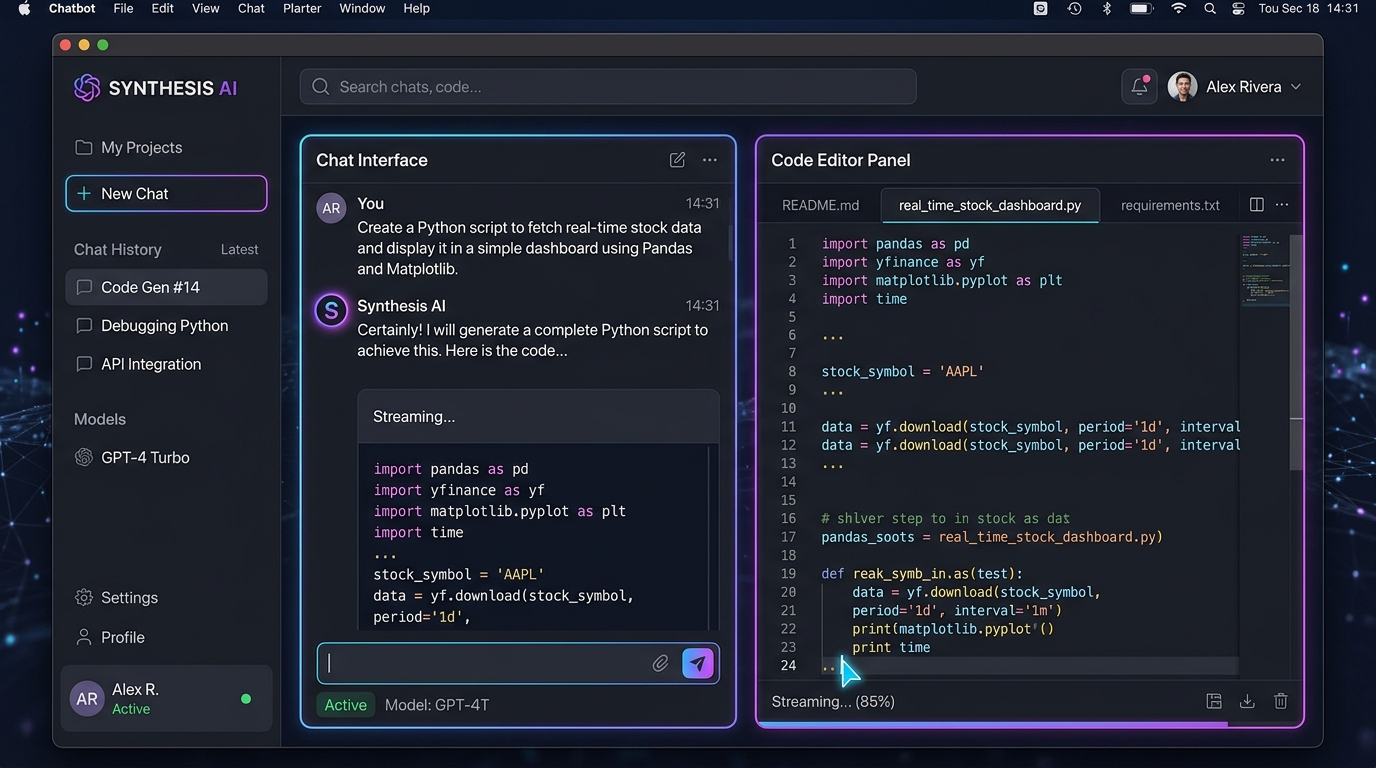
The Dawn of AI-Assisted Engineering
The software development landscape is undergoing a massive paradigm shift. Large Language Models (LLMs) and tools like GitHub Copilot, ChatGPT, and Claude are no longer just experimental toys; they are becoming essential parts of the developer toolchain.
1. Code Generation and Boilerplate
One of the most immediate benefits of Generative AI is its ability to instantly generate boilerplate code. Tasks that used to take hours—setting up a new React component, configuring Webpack, or writing basic CRUD endpoints—can now be done in seconds with a well-crafted prompt.
2. Intelligent Debugging
AI acts as a pair programmer that never sleeps. When faced with an obscure stack trace or a cryptic error message, pasting it into an AI assistant often yields not just the solution, but a detailed explanation of *why* the error occurred.
3. Architecture and System Design
Beyond writing code, generative AI is proving invaluable in the planning phases. Engineers are using AI to brainstorm database schemas, compare architectural patterns (e.g., Microservices vs. Monoliths), and even generate initial infrastructure-as-code configurations.
Will AI Replace Developers?
The short answer is no. The long answer is that AI will replace developers *who don't use AI*. The role of the software engineer is evolving from a "code writer" to an "architect and reviewer." Human context, business logic understanding, and empathetic problem-solving remain uniquely human skills.
Embrace the tools, learn prompt engineering, and you'll find yourself 10x more productive.